
By Digital Education Council
.
June 11, 2026
Among the 11 job families analysed in the AI Skills Opportunity Map, a Google.org engaged global AI readiness research initiative, education and teaching professionals show the highest level of AI embeddedness.
Yet faculty are often among the last to redesign their own practice, even as they prepare graduates for workplaces where AI-supported work is already the norm.
AI is doing more in this role than most educators realise
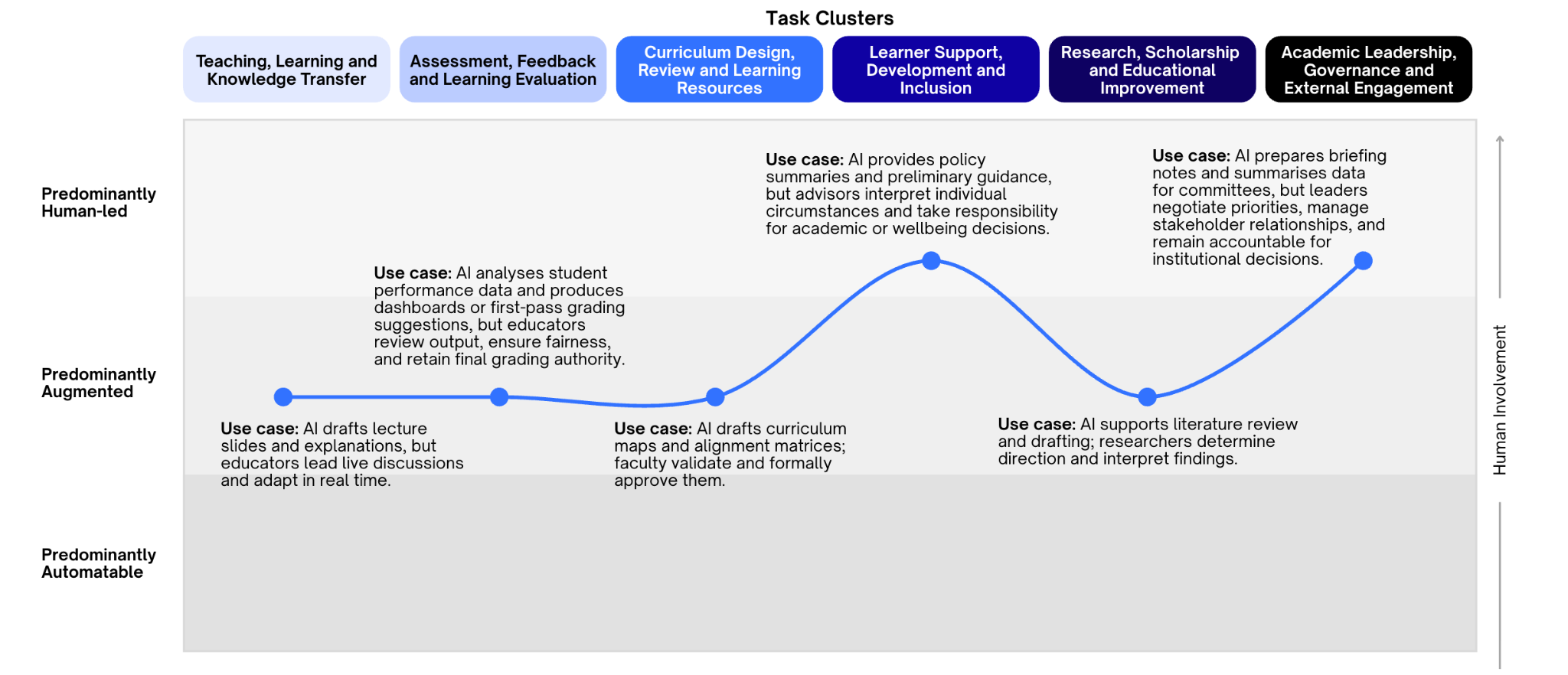
AI is deeply embedded across the education job family, primarily in tasks where human review remains part of the workflow. From drafting content to analysing performance data, it handles the groundwork. However, educators and institutional leaders still retain ultimate responsibility for what students experience.
More routine process-driven work sits closer to automation, particularly where outputs are predictable and easy to verify. The further a task moves toward individual judgement and relationship, the more human involvement it demands.
Where decisions carry real consequence for a student or an institution, professional accountability and contextual sensitivity remain firmly human. These are not gaps AI is closing; they reflect the nature of the work itself.
Assessment design has shifted and most faculty have not caught up
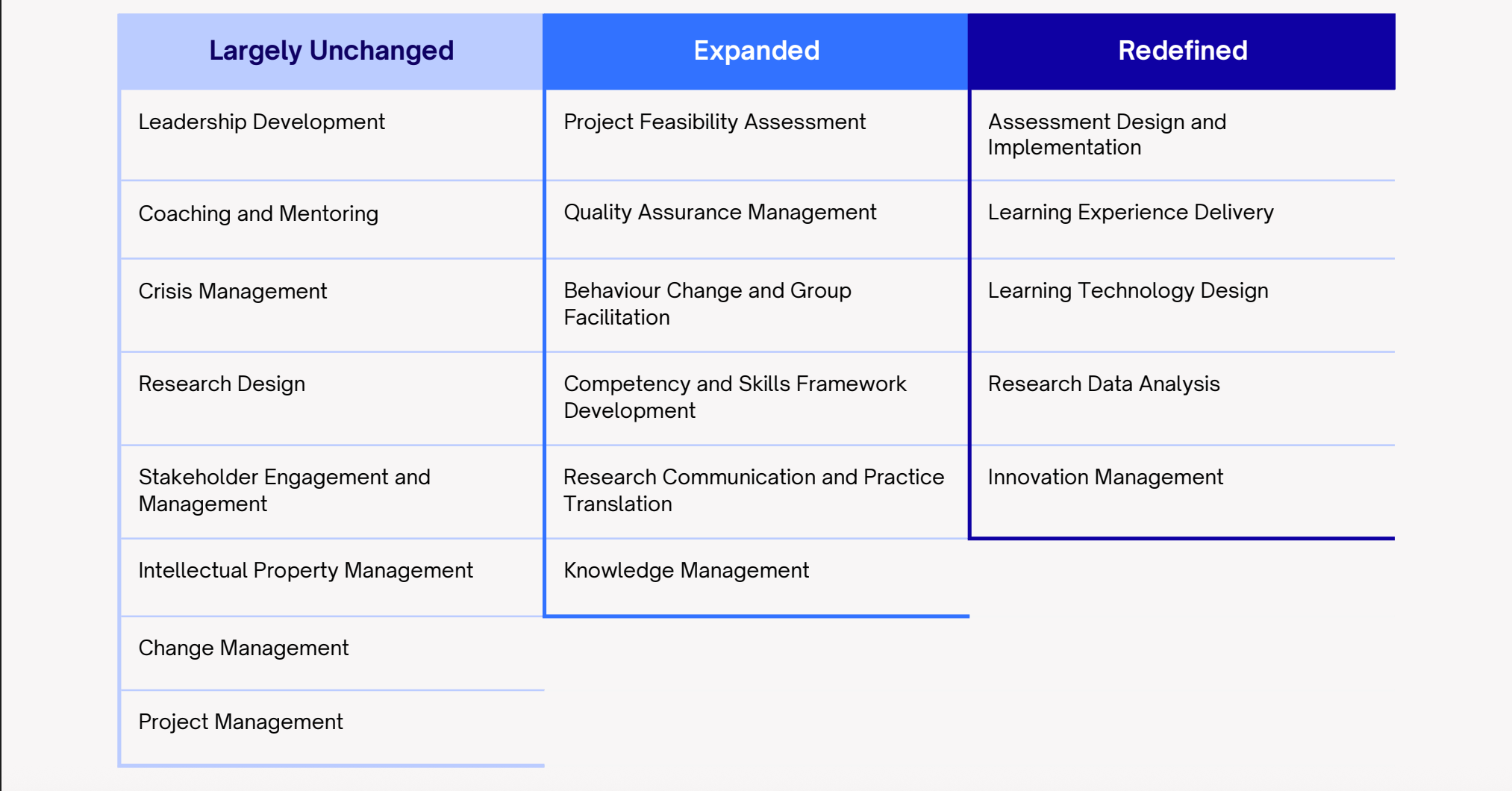
The report identifies five skills that have been structurally redefined, and assessment design and implementation is the one most faculty will recognise first.
AI can now complete many conventional assignments, and that changes what assessment is actually for. It is no longer enough to design a well-structured task. The skill has shifted to designing tasks that make student reasoning visible, and that can fairly evaluate work produced with AI support. Faculty who have not redesigned their assessments risk measuring AI use rather than subject knowledge, without intending to.
Learning experience delivery and learning technology design has shifted for similar reasons. Because AI can explain concepts and answer questions instantly, the role of the educator moves from presenting content to helping students learn through AI tools.
Similarly, AI has turned learning platforms from static delivery systems into adaptive tools that generate feedback and tutoring content in real time. The skill now lies in designing AI-enabled learning workflows, not just selecting digital tools.
Research data analysis and innovation management round out the five redefined skills. AI can now handle data processing and pattern recognition across large datasets. The skill has shifted from conducting that analysis manually to designing the frameworks that guide it, and interpreting what the findings actually mean.
Sequencing AI after domain knowledge preserves the foundations that matter
AI accelerates production, but it also bypasses the cognitive friction that builds deep understanding. The AI Skills Opportunity Map recommends sequencing AI introduction after core domain knowledge is established, not before.
The sequence matters because AI amplifies what a graduate already knows. Higher education that skips the foundations does not produce adaptable professionals; it produces capable tool users with nowhere to go when the tool falls short.
The Digital Education Council AI Skills Opportunity Map is available for download here.