
By Digital Education Council
.
November 18, 2026
24% of students say AI in their courses feels new or novel but offers limited learning benefit. A further 42% describe it as only somewhat helpful.¹
AI has reached most classrooms. For many students, its value has yet to arrive.
Educators now apply AI across teaching, from lesson design to feedback, and new use cases surface every term. What they lack is a way to tell which of these improve learning, and a sequence in which faculty can sensibly adopt them.
That gap is the subject of Scaffolding AI in Teaching, a new report by the DEC 2026 Teaching with AI Working Group.
Chaired by Jennifer Sparrow of New York University, the group drew on 45 delegates from institutions worldwide. Its central claim is simple: AI in teaching needs a scaffold, and most institutions have yet to build one.
Much of the AI practice in higher education has developed from the bottom up, through individual experimentation rather than institutional design. The resulting use cases may each be effective, but few build on one another.
Faculty readiness adds a further complication. Some educators already use sophisticated applications, while others need accessible, low-risk points of entry. No single set of recommendations can serve both groups.
The Working Group’s answer is a taxonomy that maps AI use across seven domains of teaching.
At its centre sits faculty development and institutional capability, the foundation on which everything else rests. Around it, five domains trace the arc of teaching from course preparation to student support. A further domain on inclusion and equity encloses the whole, acting as a guardrail.
Within those domains, AI use rises through four levels. At the entry level, AI handles discrete tasks such as drafting a rubric and requires minimal technical skill. At the expert level, AI reshapes teaching practice and enables forms of teaching that did not previously exist.
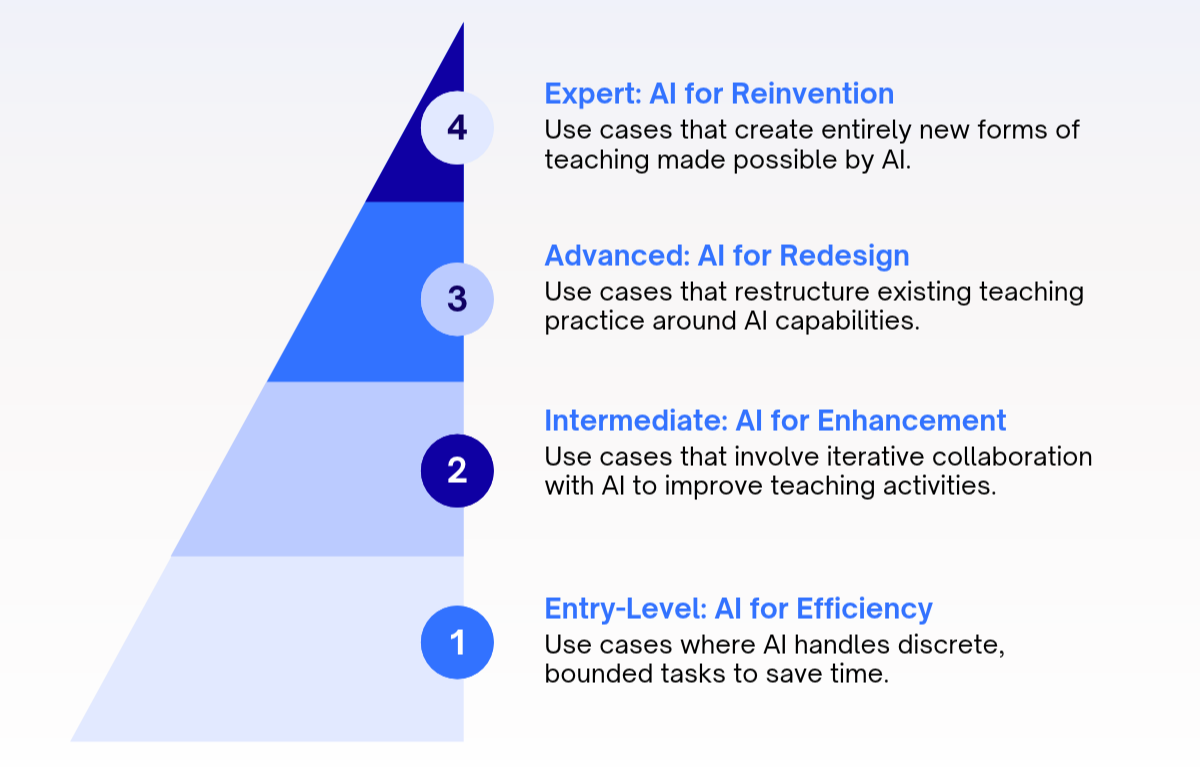
Figure 1: AI in Teaching Taxonomy. Source: DEC Scaffolding AI in Teaching (2026).
The progression is the point. It turns a menu of disconnected tools into something faculty can climb, entering where their confidence allows and rising as their skill grows. The report is explicit that it does not seek to move every educator to the highest level. Adoption should progress in line with faculty readiness and institutional capability.
A natural objection is that institutions should aim straight for the most advanced uses of AI. If AI can transform teaching, simple time-saving tasks can look like a distraction.
The Working Group argues that how advanced a use case is says little about its value. What matters is whether it improves learning. The report asks institutions to evaluate every use case on three questions, in order. First, impact: does it improve learning while still making students think for themselves? Second, risk: are there dangers serious enough to rule it out, whatever its benefits? Third, resources: can the institution afford to run and sustain it?
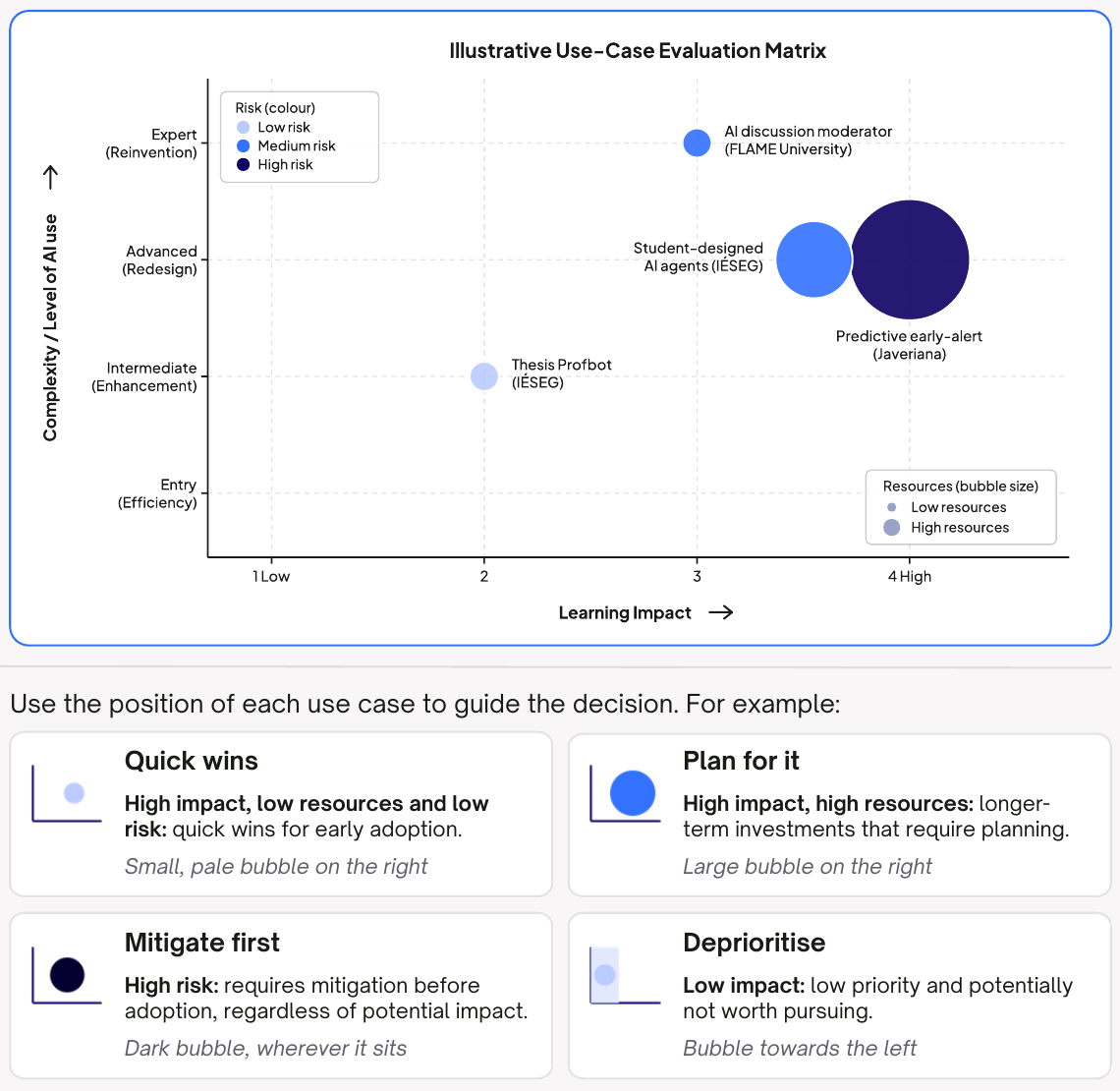
Figure 2: Illustrative Use-Case Evaluation Matrix. Source: DEC Scaffolding AI in Teaching (2026).
On this basis, an advanced tool that adds little to learning is a poor investment. A simple tool that frees up faculty time for students may be worth far more. The report presents these questions as prompts for judgement rather than a scoring system.
The report extends the same scaffold to learners.
Drawing on frameworks such as Bloom’s Taxonomy, it argues that AI’s role should shift as students mature. The productive struggle through which understanding is built should remain theirs.
That makes timing as consequential as the tool itself. A use case that lets a first-year student skip foundational reasoning may stunt their development. Handed to a final-year student who has already done that work, the same tool may be entirely appropriate.
Institutions therefore need to examine how AI use progresses across an entire programme, rather than course by course.
For now, many institutions measure progress by how much AI is in use.
The student data suggest that this measure overstates their progress. The more demanding question is whether each use of AI reaches faculty when they are ready for it, and students when it will help rather than hinder.
Leaders face a choice. They can keep adding use cases and count the total, or they can build the scaffold that sequences them. AI’s value in teaching will depend less on how much of it institutions adopt than on the order in which they adopt it.
Read the full report, Scaffolding AI in Teaching, here.
DEC members can also access Executive Briefing #034 in the DEC Member Area.